Finding an effective time tracker for work means balancing detail with ease of use. The following reviewed notebooks and planners are designed to help professionals log billable hours, track tasks, and manage daily schedules without digital distractions. This guide highlights five strong options, each offering clear layouts for hourly planning, task tracking, and client or project notes.
| Product | Brand | Format |
|---|---|---|
| BookFactory Time Tracker Notebook | BookFactory | 6″ x 9″, Wire-O, 100 pages |
| Activity Log Notepad – Daily Tracker | Life Charge | 8.5″ x 11″, 60 pages |
| INKNOTE Time Tracker Journal | INKNOTE | 9″ x 6.1″, 100 pages |
| Weekly To Do List Notepad | Thboxes | 8.5″ x 11″, 62 pages |
| SUNEE Daily Planner A5 | SUNEE | A5, 2026 daily planner |
BookFactory Time Tracker Notebook

The BookFactory Time Tracking book is designed for legal professionals, consultants, and freelancers who bill by the hour. It uses a two-page spread: the left page records daily hours and client details, while the right page captures task specifics, breaks, and exact time spent. Made in the USA and veteran-owned, this wire-o bound notebook prioritizes a straightforward, durable format suitable for busy offices or on-site engagements.
Activity Log Notepad – Daily Tracker

This daily activity log notepad emphasizes real-time or after-the-fact tracking of calls, meetings, and job tasks. Its undated layout offers flexibility for varying workloads, and its simple structure supports time tracking, task logging, and client communications. It’s suitable for office desks, real estate workflows, and remote work environments where quick entry and easy page turning matter most.
INKNOTE Time Tracker Log Timesheet Notebook
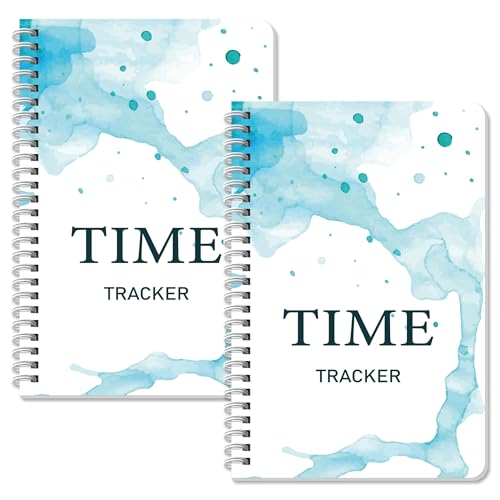
The INKNOTE two-piece time tracker set provides a 2-page spread format with days and hours on the left and detailed task and client information on the right. The spiral binding facilitates easy page turns, and the compact 9″ x 6.1″ size makes it portable for on-site use. It’s designed to help users monitor where time goes and optimize task scheduling across multiple clients.
Weekly To Do List Notepad

This undated weekly planner emphasizes prioritization with a top priorities section, a low priorities section, and a follow-up area. With a spiral binding and a transparent cover, it’s designed for easy week-by-week planning, making it suitable for office teams, households, or freelancers who want to structure tasks and habits throughout the week.
SUNEE Daily Planner A5

The SUNEE A5 daily planner provides hourly scheduling blocks, monthly tabbed planning, and a high-quality writing experience with 70gsm paper. The hardcover and flat-lay design support comfortable, expansive writing for work, school, and personal goals. It’s well-suited for professionals who need precise day-by-day time allocation and long-range planning in one notebook.
Buying Guide: Key Purchase Considerations
- Layout and time granularity — If you bill by the hour, choose planners with explicit hourly blocks and a dedicated space for client or project identifiers. For broader task management, two-page spreads (hours on the left, tasks on the right) help you associate time with outcomes.
- Undated vs. dated — Undated formats offer flexibility for irregular workloads, while dated planners can support long-term habit tracking and monthly goals. Your cadence determines the ideal choice.
- Size and portability — Smaller notebooks are easy to carry to meetings or on-site tasks, but larger pads provide more room for notes. Consider your typical work environment and whether you travel often.
- Binding and durability — Spiral bindings allow easy page turning and flat layouts; wire-O and hardcover formats enhance durability in busy office spaces or job sites.
- Material quality and writing experience — Higher gsm paper minimizes bleed-through and ghosting with common pens. If you use markers or fountain pens, test bleed resistance to preserve legibility on every page.
- Special features — Look for features like task prioritization sections, client logs, breaks tracking, and reminders. These elements help create a complete time-tracking workflow beyond simple hours logged.
- Budget and volume — If you need multiple copies for teams or offices, consider value packs or cost-per-page. A good balance between price and durability supports consistent usage across a work period.
Buying Guide: Comparisons By Use Case
- Best for client-heavy workloads — BookFactory Time Tracker offers a clear left-right page layout ideal for billable hours and client-specific notes, making it a solid pick for lawyers and consultants.
- Best for flexible daily logging — Life Charge Activity Log Notepad excels in undated daily entries, suitable for fast-paced environments where daily interactions vary greatly.
- Best for multi-client time tracking — INKNOTE Time Tracker Journal provides a compact two-page spread with dedicated client/task areas, helpful for professionals juggling several clients.
- Best for weekly planning and habit tracking — Weekly To Do List Notepad focuses on weekly priorities and routines, complementary for teams or individuals who plan over the week.
- Best for structured daily planning — SUNEE Daily Planner offers hourly blocks and monthly goals in a durable A5 format, suitable for those who need a rigid daily structure with future planning.
In practice, the optimal time tracker blends a clear hourly layout with practical sections for client work, tasks, and daily priorities. When selecting, consider your workflow: do you need precise hourly records, flexible daily entries, or a balance of both? The five products above provide solid options across these scenarios to support effective time management in a typical American work environment.